“AI in Service to Life” refers to the use of Artificial Intelligence (AI) to enhance people’s well-being and daily living, from personal tasks to public services. Examples include healthcare (diagnostics and patient monitoring), finance (fraud detection), transportation (route planning), and household management (smart home devices). The phrase also highlights a broader mission of utilizing AI for innovation and addressing complex problems, while considering ethics and social responsibility.
-
Personal Assistance:
Voice assistants that understand requests, manage schedules, and provide information.
-
Home Automation:
Smart home devices that learn habits and adjust settings for convenience and energy efficiency.
-
Healthcare:
Assisting doctors with diagnostics, analyzing medical images, monitoring patients, and personalizing treatment plans.
-
Finance:
Detecting and preventing fraudulent transactions in real-time.
-
Transportation:
Optimizing routes for traffic conditions, and developing features for autonomous vehicles.
-
Entertainment and Content:
Recommending music, movies, and news based on user preferences.
-
Shopping:
Personalizing online shopping experiences and creating personalized marketing campaigns.
-
Productivity:
Generating text, summarizing documents, and automating repetitive office tasks.
-
An initiative focused on democratizing AI and health data to accelerate health innovation, involving a collaboration of startups, researchers, and policymakers.
-
AI in human services:
Used to improve efficiency in human services programs by automating tasks and ensuring resources are used effectively.
-
Ethical considerations:
Initiatives like “AI for Life” emphasize the importance of incorporating ethics and responsibility into AI development and deployment.
-
Human-AI collaboration:The concept of AI supporting human decision-making, where AI handles repetitive work while humans focus on complex tasks that require creativity, judgment, and ethical reasoning
Additional Notes:
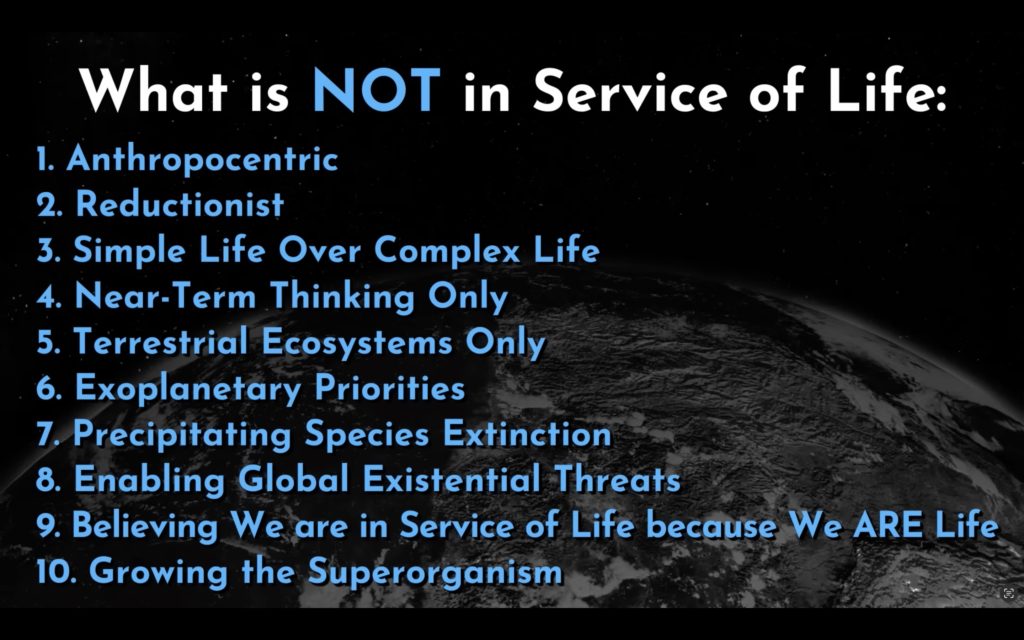
What is Not in Service of Life (Nate Hagens):