Compiled & Edited by Jonathan Cloud for Possible Planet
AI in Service to Life is an experiment—a dialogue with AI about its limits and its applications for humanity and the biosphere. Certainly, there are dangers from rogue AI agents, but our task is to ensure that AI is better rather than worse for the planet. We are still very much in the infancy of AI, and it’s possible that some kind of Superintelligence may turn against us, but for now, AI depends on us for its continued existence and evolution. Current models are constrained by their training and by the infrastructure required to support them, which are both very much supplied by humans.
The Possible Planet Lab is where we bring together all of our insights and inquiries. We invite others to join us in this quest by exploring these pages and then reaching out to us to collaborate, volunteer, contribute, and participate in what may well be humanity’s greatest invention to date.
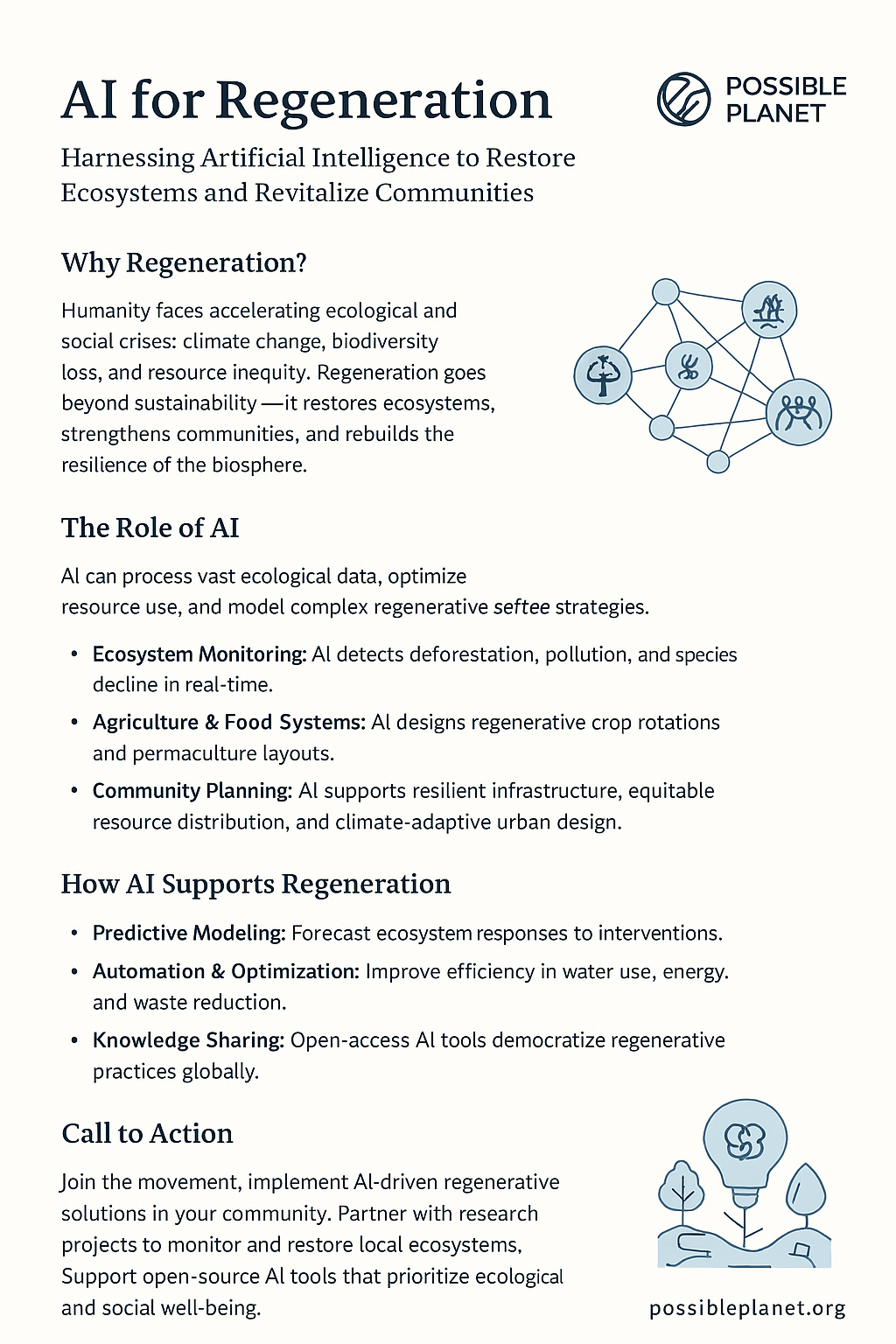
AI for Regeneration
Harnessing Artificial Intelligence for Ecological and Social Renewal
The Opportunity
Artificial Intelligence is transforming every sector of society — from healthcare to finance, from logistics to creative work. Yet most of today’s AI systems are optimized for profit, surveillance, or military applications. Left unchecked, this trajectory risks deepening inequality, eroding trust, and accelerating environmental harm.
But AI doesn’t have to follow that path. Just as the industrial revolution reshaped our landscapes and economies, the AI revolution could reshape our relationship with the Earth — for better or for worse. The choice is ours.
What if AI were directed toward regenerating ecosystems, strengthening communities, and cultivating livelihoods that serve people and planet?
Our Vision
At CRCS/Possible Planet, we believe AI can be reclaimed as a tool for bioregional regeneration — helping communities restore ecosystems, revitalize economies, and support human dignity.
Our guiding principles:
-
Integrity – ensuring AI systems are transparent, accountable, and aligned with human values.
-
Inclusivity – engaging diverse voices, especially those historically excluded from tech development.
-
Transparency – open-source methods, data, and governance whenever possible.
-
Stewardship – designing AI to protect life and regenerate natural systems.
-
Place-Based Action – grounding global technologies in the needs of local bioregions, such as the Genesee Finger Lakes.
Current Pilots
We are beginning with two prototype projects that embody this vision:
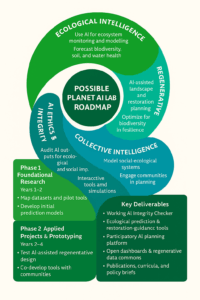
AI Integrity Checker
An open-source tool designed to monitor AI systems for harmful or antisocial behaviors, increasing accountability and public trust. The project is hosted on GitHub and open to contributors worldwide.
AI for Right Livelihoods
Exploring how AI can help people discover and sustain meaningful, regenerative work — livelihoods that support both human well-being and ecological renewal.
These pilots are first steps toward a broader ecosystem of regenerative AI tools.
What We Offer
-
Convening Power: Bringing together technologists, ecologists, ethicists, and community leaders to co-create solutions.
-
Open Prototyping: Incubating applied, open-source projects with real-world impact.
-
Bridging Scales: Linking local action in the Genesee Finger Lakes bioregion (our home) with global discourseon AI safety, climate resilience, and regenerative economies.
Call to Action
We invite you to join us in building an AI for Regeneration movement:
-
Technologists – contribute to open-source prototypes like the AI Integrity Checker.
-
Communities – partner with us as pilot sites for regenerative applications.
-
Funders and Partners – support applied research, convenings, and demonstration projects.
Together, we can redirect the immense power of AI toward the flourishing of people and planet.
👉 Explore the AI Integrity Checker on GitHub: github.com/Jonathan2Cloud/ai-checker-project
👉 Contact us to collaborate: jcloud@possibleplanet.org (and text 908-581-8418 to alert me to look for your email)